
Concrete Repair in Mesa, AZ
Not every cracked slab needs to come out. Botta's Concrete Construction assesses repair requests honestly — identifying when a repair is a solid long-term investment and when replacement would cost less over time.
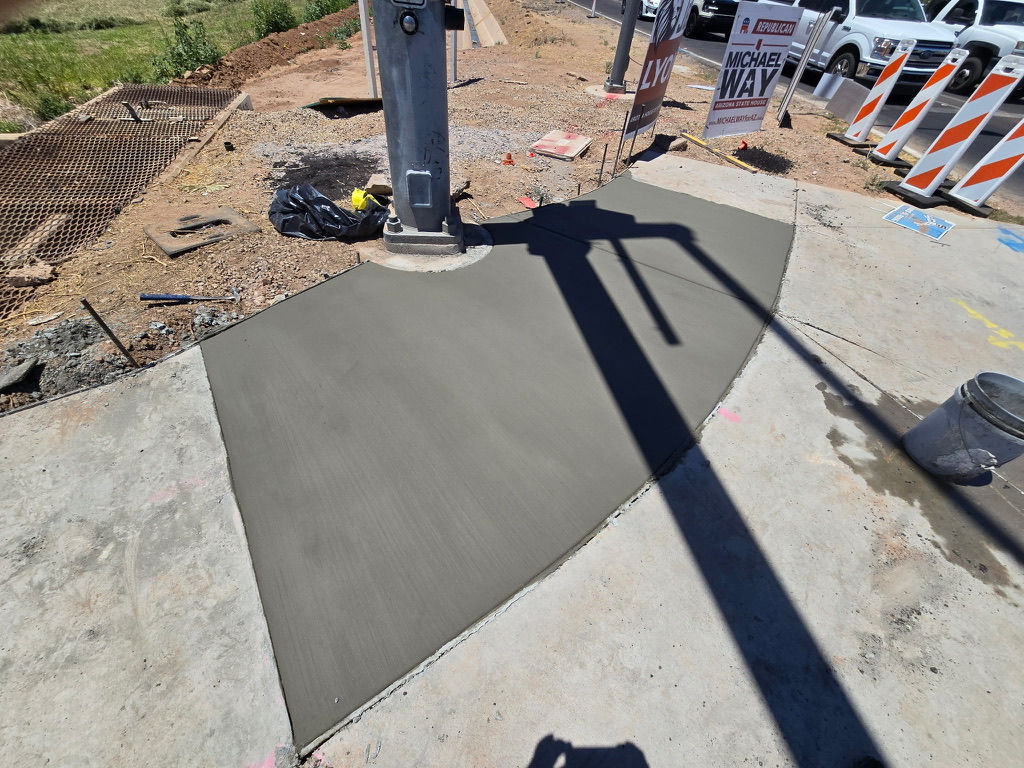
Types of Concrete Repair Botta's Handles
Common residential repair types include: crack filling (polyurethane or epoxy injection for structural cracks, elastomeric fill for movement joints), surface patching (spalling, pop-outs, and surface erosion), control joint repair (failed or deteriorated joint filler), and edge repair (broken slab edges at expansion joints or transition points).
Not all repair products are equal, and not all repair types address the underlying cause. Botta's explains what the repair will and won't accomplish before the work begins.
Which Repairs Are Worth Doing
A repair is worth doing when: the underlying cause has been resolved (tree root removed, drainage fixed, load source eliminated), the surrounding slab is in good structural condition, the repair will meaningfully extend the useful life of the slab, and the repair cost is a reasonable fraction of full replacement cost.
A repair is probably not the right answer when: the base has failed, drainage continues to erode the subgrade, cracking is widespread and interconnected, or the slab has deteriorated to the point where repair product has no solid substrate to bond to.
Repair vs Replacement: The Long-Term Value Question
The most useful question to ask is not "what does the repair cost?" but "how long will this repair last and what's the total cost per year of service life?"
A $400 repair that lasts 2 years costs $200/year. A $2,500 replacement that lasts 25 years costs $100/year. But a $400 repair on a slab with an unresolved drainage issue may last 6 months before the same crack reopens.
Botta's assessment includes the expected service life of the repair given the underlying conditions — not just the cost of the work itself.
Common Repair Mistakes to Avoid
Filling cracks without addressing the cause — most crack fillers are not structural products. They seal the surface without addressing movement or base failure.
Using the wrong product for the application — flexible joint sealants and rigid crack fillers are not interchangeable. Joints that experience movement need flexible products.
Ignoring small cracks — small surface cracks allow water infiltration, which in Arizona's freeze-thaw range (it does occasionally get cold in Mesa) and summer heat cycling, accelerates deterioration.
System Connections
Ready to Plan Your Concrete Project?
Tell Botta's Concrete Construction what you're working with. We'll review your details and reach out with next steps — no pressure, no mystery pricing.